
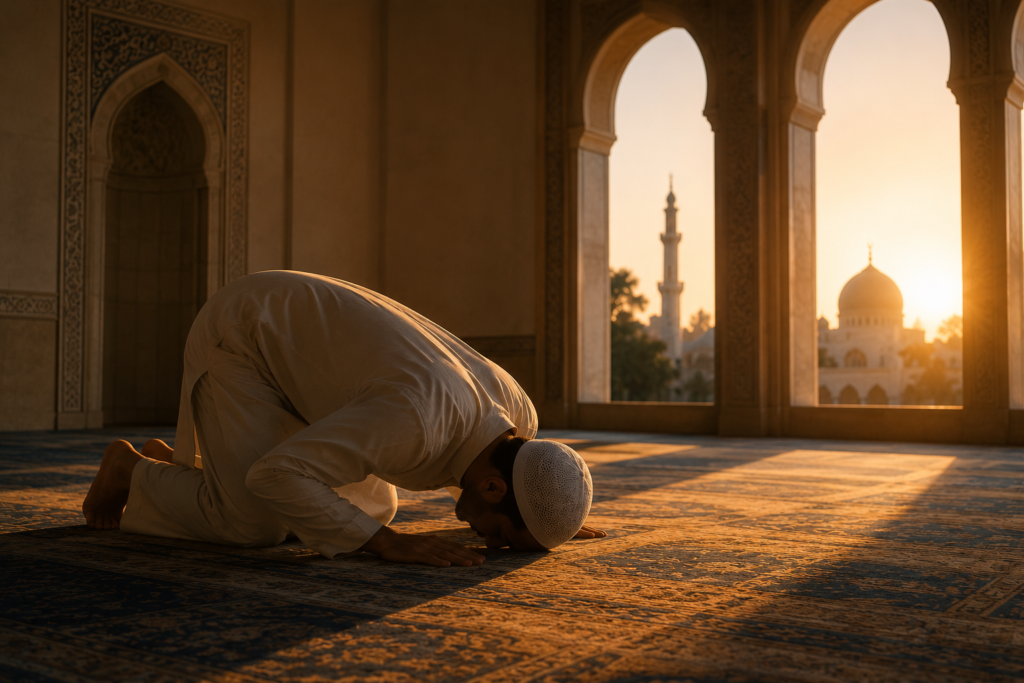
A lot of people want to understand Islam but don’t know where to start. One of the first things they wonder about is prayer, how it works, and why it matters so much to Muslims.
Without this basic understanding, it is easy to misread Muslim behavior or miss the deeper meaning behind their daily routine. Many people have tried to learn from random sources and ended up more confused than before.
If you want a clear, simple answer, you are in the right place. This article breaks it down in a way that anyone can understand, whether you are Muslim or not.
Islam teaches that Muslims should pray five times a day. These prayers are not just rituals. They are a direct connection between a person and God, built into the entire day.
If you have ever asked how many times a day Muslims pray, the answer is five. But the more interesting question is why, and what happens during those five moments, and that is exactly what we will cover here.
Why Do Muslims Pray Five Times a Day?
Prayer in Islam is not optional. It is one of the Five Pillars, meaning it is a core part of the faith, not something a person does when they feel like it.
The five daily prayers were bestowed upon the Prophet Muhammad during the Night Journey. Allah originally commanded 50 prayers a day, but this was reduced to five after the Prophet requested something more manageable for people.
In His generosity, Allah decreed that the reward for observing the five daily prayers would still equal that of fifty prayers. So Muslims pray five times, but the spiritual reward is as if they prayed fifty.
In Islam, prayer is the first thing a person will be held accountable for on the Day of Resurrection. It is also the key to a Muslim’s communication with God in both times of distress and of happiness.
How Many Times a Day Do Islamic People Pray
The answer is five times, every single day. These five prayers are not suggestions. Muslims are supposed to pray five times a day, at dawn, noon, mid-afternoon, sunset, and evening.
For Muslims, the five daily prayer times are among the most important obligations of the Islamic faith. They remind the faithful of God and provide multiple opportunities to seek His guidance and forgiveness throughout the day.
These prayers also connect Muslims to each other. No matter where a person is in the world, they are praying the same words, facing the same direction, at roughly the same time. It creates a sense of unity that goes beyond borders.
According to the Pew Research Center, in many Muslim-majority countries, the majority of Muslims pray multiple times a day, with some regions showing over 90% daily prayer observance. That tells you how central this practice really is.
The Five Daily Prayers in Islam
The five prayers are called Salah, and each one has a fixed time in the day. They are spread out from before sunrise to nighttime, so a Muslim never goes for too many hours without remembering God.
The five prayers are Fajr, Dhuhr, Asr, Maghrib, and Isha. During each prayer, Muslims perform a series of movements called rak’ah, which begins with recitation from the Quran, followed by kneeling, and is completed with prostration.
Each prayer has a different number of these units. For example, Fajr is the shortest with just two, while Dhuhr and Asr each have four. The prayers are short but intentional, usually taking just a few minutes each.
Names and Times of the 5 Daily Prayers
Muslims pray at least five times a day. The obligatory prayers are Fajr before dawn, Dhuhr at noon, Asr in the late afternoon, Maghrib at sunset, and Isha at nighttime. Each prayer time is tied to the sun’s position, so the exact times shift each day slightly.
In ancient times, people would look at the sun to determine prayer times. Today, printed daily schedules and apps precisely pinpoint the start of each prayer window.
Missing the window matters. All schools of thought agree that any given prayer cannot be performed before its stipulated time. This structure keeps Muslims anchored throughout their day.
What Happens If a Muslim Misses a Prayer?
Life gets busy, and sometimes a prayer is missed. Islam addresses this situation clearly, though the ruling depends on why the prayer was missed.
A missed prayer is a serious event and not one to be dismissed lightly. Practicing Muslims are expected to acknowledge every missed prayer and make it up according to accepted practice.
If a prayer is missed for unavoidable reasons, it can be made up later without it automatically counting as a sin. However, regularly missing prayers without a valid reason is considered a sin in Islam.
According to IslamQA, if a person misses a prayer due to sleep or forgetfulness, they should make it up as soon as they remember. The punishment for deliberately skipping prayers without a valid excuse is more severe, and scholars differ on how to handle it.
The key takeaway is simple. Try your best to pray on time. If you miss one, make it up quickly and do not make a habit of skipping.
How Many Times Do Muslims Pray a Day While Traveling?
Traveling does not cancel prayer. Muslims still pray five times a day on the road, but Islam makes it easier through two special concessions: shortening and combining.
As soon as you leave your city limits, the concession of shortening prayers becomes valid. Zuhr, Asr, and Isha are each reduced from four units to two. Fajr and Maghrib remain unchanged.
Another travel concession is combining two prayers into a single time window. For example, Dhuhr and Asr can be prayed together, and so can Maghrib and Isha. This is especially useful on long travel days when stopping twice is impractical.
According to IslamicFinder, this concession is a mercy from Allah, not an excuse to skip prayer. The prayer still happens, just in a form that fits the circumstances of travel.
FAQs
How many times a day do Muslims pray?
Muslims pray five times a day. These are Fajr, Dhuhr, Asr, Maghrib, and Isha. Each prayer happens at a set time based on the sun’s position.
Do all Muslims pray five times a day?
Most do, but practice varies. Some Muslims pray three times a day, believing the Quran mentions three prayers. In general, Sunnis view the five daily prayers as obligatory.
How long does each prayer take?
Each prayer takes about five to ten minutes. The number of units varies per prayer, but none of them are long. Most people easily fit them into their daily schedule.
Can you pray in English instead of Arabic?
The obligatory prayer is performed in Arabic. This is a standard across all schools of thought and is part of what connects Muslims worldwide through shared words and movements.
What if someone is sick? Can they still pray?
Yes. Those who are sick or physically unable to stand may perform their prayers sitting or lying down, according to their ability. Islam always considers a person’s real condition.