
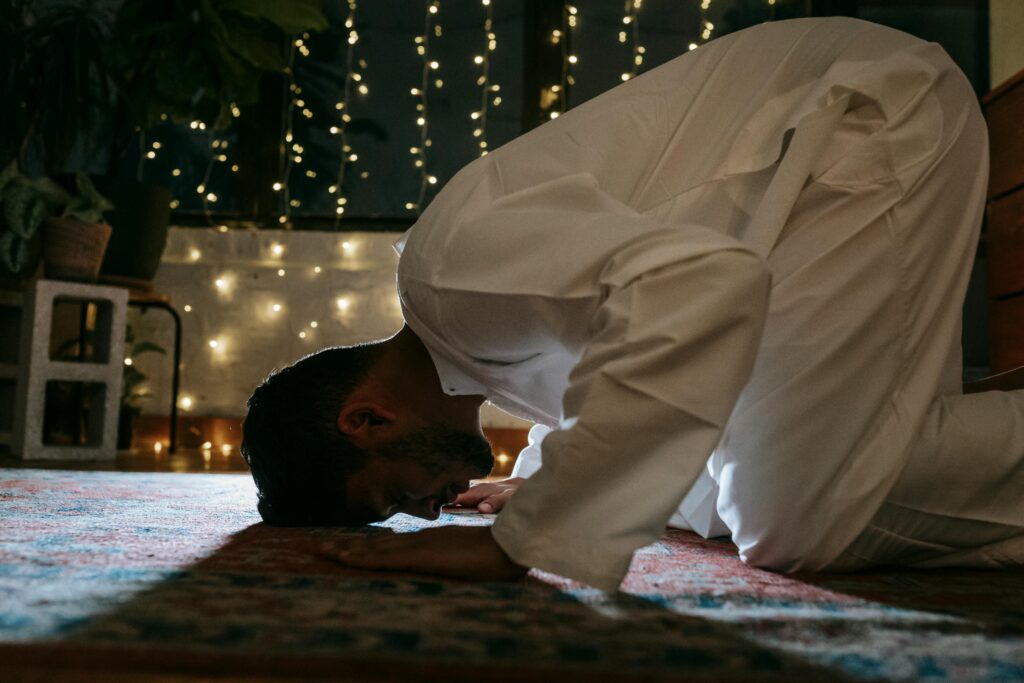
A lot of people want to connect with Allah but feel lost the moment they try to start praying. They don’t know the right steps, the right words, or even where to begin, and that confusion stops them from building a real connection with their Creator. When a Muslim doesn’t know how to pray properly, they miss one of the most important pillars of their faith, and over time, that distance from Allah grows wider.
Prayer in Islam, called Salah, is the second pillar of the faith and a direct way to speak to Allah five times every day. Salah is a direct line to Allah, a moment to pause and reflect, express gratitude, and seek guidance. Without this foundation, a Muslim’s day has no spiritual anchor.
According to Islam pro, performing Salah with sincerity and practice becomes a natural and fulfilling part of daily life. The good news is that once you understand how to pray in Islam, the steps become a routine that feels deeply personal rather than mechanical.
How Many Times a Day Do You Pray in Islam?
Muslims pray a minimum of five times a day, with their obligatory prayers being Fajr (before dawn), Dhuhr (noon), Asr (late afternoon), Maghrib (at sunset), and Isha (nighttime). Each prayer has a specific window of time tied to the sun’s position, not a fixed clock time.
These five daily prayers were bestowed upon the Prophet Muhammad during the Night Journey. Allah originally commanded fifty prayers, but this was reduced to five after the Prophet asked that it be made easier. Yet Allah decreed that the reward would still equal that of fifty prayers. Regularly missing prayers without a reason is considered a serious matter in the faith.
How Do You Know When to Pray in Islam?
In ancient times, Muslims simply looked at the sun to determine prayer times. Today, printed schedules and phone apps can accurately inform you of the start of each prayer time based on your location. Prayer times shift daily because they are based on the actual movement of the sun.
Each prayer has a window during which it can be performed. For example, an afternoon prayer window may last several hours, giving Muslims enough time to pray without having to stop everything immediately. This flexibility makes it easier to stay consistent without feeling overwhelmed.
How Long Do You Pray in Islam?
Most people are surprised to find that a single prayer doesn’t take long at all. Each prayer takes about 5 to 10 minutes to complete. The number of units, called rakat, differs between each of the five prayers, which is why some are slightly longer than others.
Fajr has two rakat; Dhuhr and Asr each have four; Maghrib has three; and Isha has four obligatory rakat. When you add sunnah prayers on top, the time increases, but the core obligation is short and manageable.
How Do You Start a Prayer in Islam?
Before the prayer even begins, preparation matters. You must first make your intention in your heart, face the direction of the Qibla, and then raise your hands to your ears, saying “Allahu Akbar,” which marks the official start of prayer. Women raise their hands to shoulder level instead.
Before you reach that point, you must also perform Wudu, which is the ritual washing. Islamic teaching requires Muslims to wash their hands, feet, arms, and legs before praying, and to wear modest, clean clothing. Without valid Wudu, the prayer is not accepted.
How Do You Say Prayer in Islam?
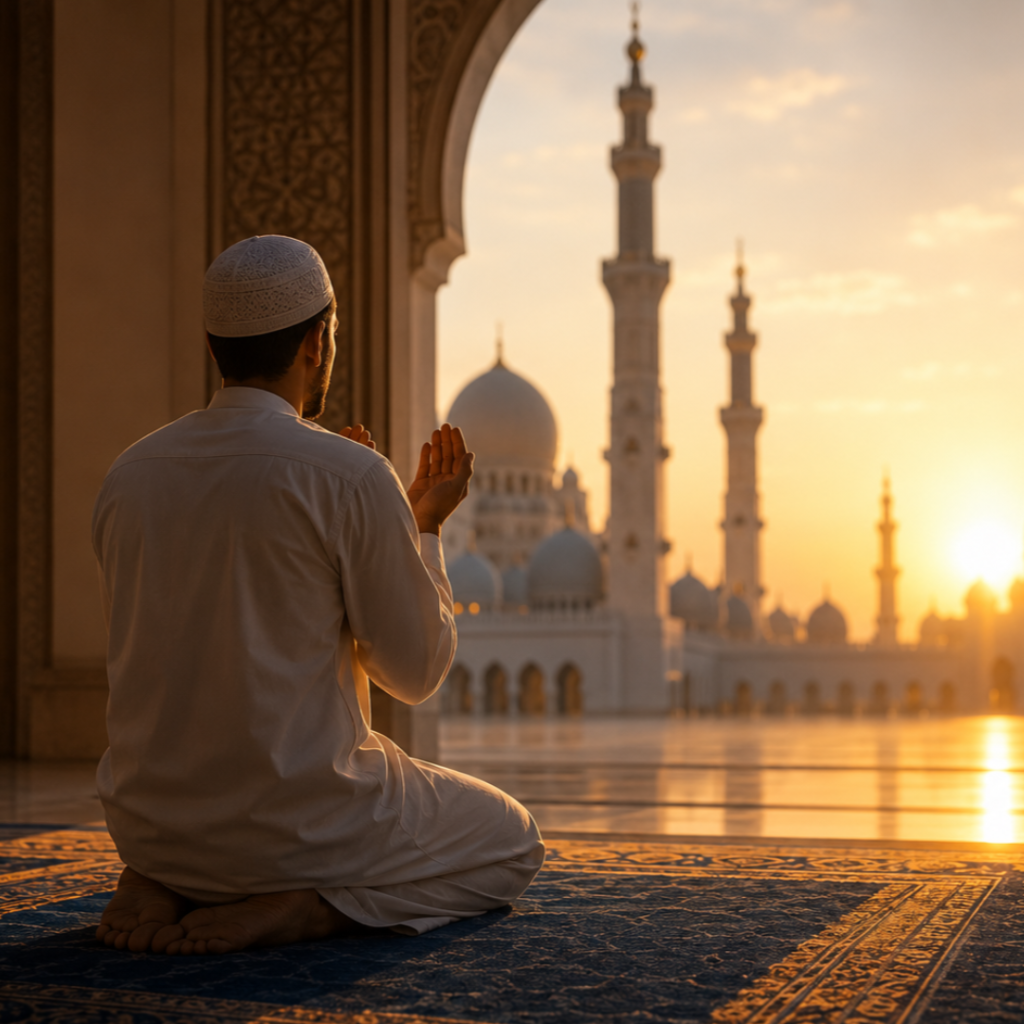
The words said during Salah are in Arabic and follow a specific order. After saying Allahu Akbar, you recite Surah Al-Fatiha in every single rakat, and you may add another short chapter from the Quran in the first two rakat. Surah Al-Fatiha is the foundation of every unit of prayer.
During bowing (Ruku), you say “Subhana Rabbiyal Azeem” three times, and during prostration (Sujud), you say “Subhana Rabbiyal A’la” three times. Reciting Surah Al-Fatiha only in the heart without actually saying it, even as a whisper, does not count, so the words must be verbally uttered.
How Do You Pray in Islam, Sunni?
In the Sunni tradition, the prayer follows the method taught by the Prophet Muhammad and passed down through authentic hadith. After Takbir, you cross your hands at chest level, grab your left wrist with your right hand, and begin the opening supplication. This hand position is a key feature of Sunni prayer, particularly in the Hanafi, Shafi’i, Maliki, and Hanbali schools.
The core structure is the same across all four Sunni madhabs, with minor differences in details like hand placement and some recitations. The salah has multiple movements, including standing, bowing, prostrating, and sitting, all performed just as the Prophet taught. Learning from a qualified teacher or a trusted guide helps ensure the prayer is done correctly.
How Do You Pray Sitting Down in Islam?
Standing is normally required in prayer, but Islam makes a clear concession for those who cannot. According to Islam Q&A, a sick person, an elderly person who finds standing difficult, or anyone whose illness would worsen by standing is permitted to pray sitting down. The principle is that you do whatever you are capable of.
If you cannot stand, you pray sitting. If you cannot sit, you pray lying on your side. If you cannot do that, you pray lying on your back. Scholars also confirm that a person praying with a valid excuse receives the same full reward as if they prayed standing.
How Do You Pray for Forgiveness in Islam?
Islam has a special prayer specifically for seeking forgiveness, known as Salat al-Tawbah, the Prayer of Repentance. The Prophet taught that whoever performs two rakat with full focus, then sincerely asks Allah for forgiveness, Allah will forgive them. The precondition is being in a state of Wudu and feeling genuine remorse in the heart.
Beyond this prayer, saying Astaghfirullah daily is also a powerful way to seek forgiveness. According to Yaqeen Institute, good deeds wipe away minor sins, and Allah’s mercy prevails in ways we cannot fully measure. The key is sincerity and not delaying repentance.
How Do You End a Prayer in Islam?
The prayer ends with a specific action called Tasleem. Worshippers turn first to their right and then to their left, saying “Assalamu Alaikum Wa Rahmatullah,” which means “Peace be upon you, and the mercy and blessings of Allah.” This greeting marks the formal close of the prayer.
Before reaching Tasleem, the last sitting position includes a recitation called Tashahhud. After finishing the required number of rakat, you sit for the Tashahhud, the testimony of faith, before completing the prayer with Salam. After the Salam, it is recommended to make personal dua and dhikr.
FAQs
What is the first thing I need to do before praying in Islam?
You need to perform Wudu, the ritual washing of hands, face, arms, and feet. You also need to face the Qibla and make your intention in your heart.
Can I pray in English instead of Arabic?
The obligatory recitations in Salah must be in Arabic. You can make a personal dua in any language, but the core prayer words must be in Arabic.
What happens if I miss a prayer?
You should make it up as soon as you remember or add it to your next prayer. Regularly missing prayers without a valid reason is a serious matter in Islam.
Is it okay to pray without a prayer mat?
Yes, the mat has no religious requirement. You just need a clean surface and clean clothing. The mat is simply used for comfort and cleanliness.
Do men and women pray differently in Islam?
The words and steps are the same. There are minor differences in posture, such as women raising their hands to their shoulders for Takbir rather than to their ears, but the overall structure is identical.